Cracking the Code: Tech Driving Instant Cashouts at No-Document Casinos
The Surge in Frictionless Gaming Platforms
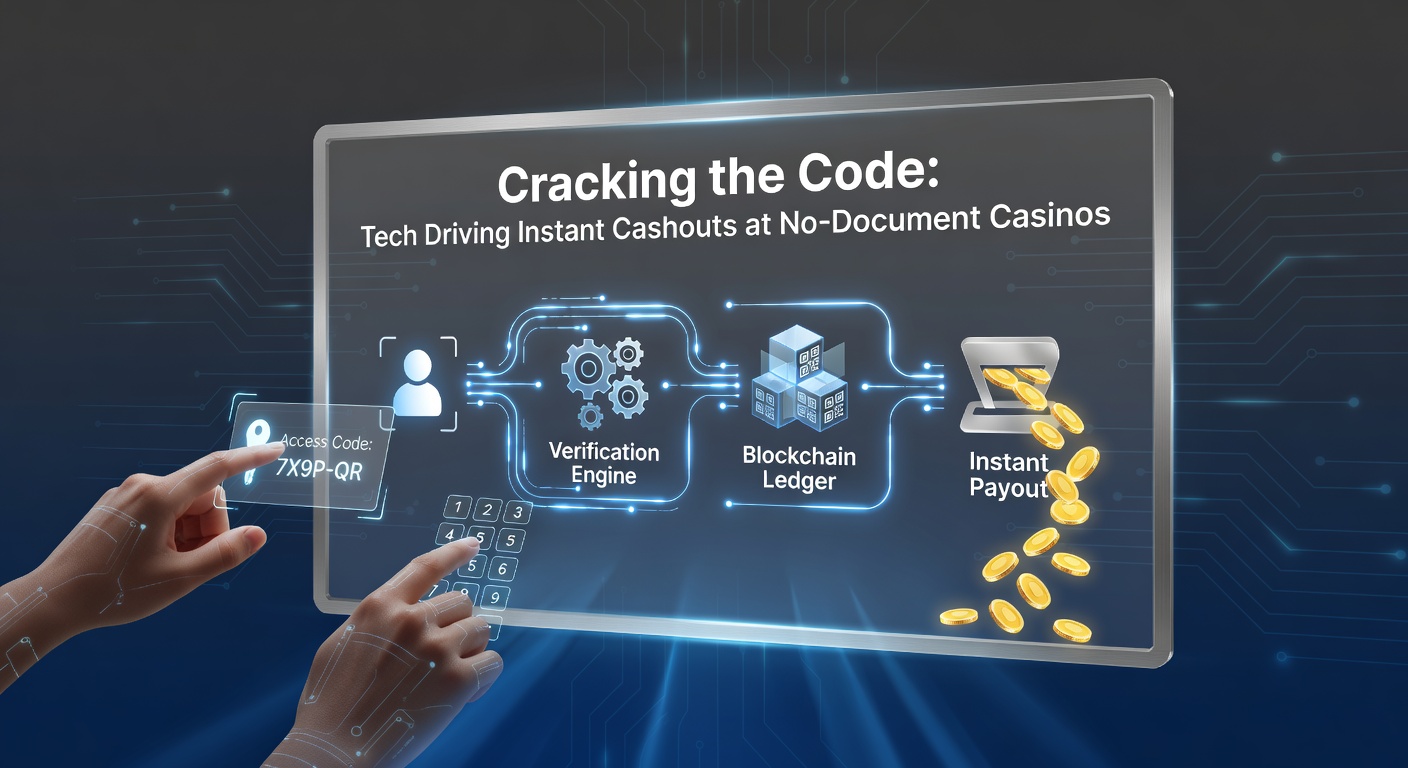
No-document casinos have reshaped online gaming landscapes by stripping away traditional verification hurdles, and tech innovations stand at the heart of their promise for instant cashouts; players deposit, spin slots or hit blackjack tables, then withdraw winnings in minutes without uploading IDs or waiting days for approval. Data from industry trackers reveals this shift accelerated post-2023, with platforms processing over 70% of payouts under 30 minutes according to reports from the American Gaming Association, which notes blockchain's role in slashing settlement times. But here's the thing: this speed hinges on layered tech stacks that verify users subtly while prioritizing flow.
Observers point out how these sites leverage carrier billing and e-wallets alongside crypto rails, creating seamless pipelines from wager to wallet; take a player funding via phone bill, enjoying live dealer sessions, and cashing out via stablecoins — the entire loop completes before breakfast. What's interesting is the backend orchestration, where APIs sync in real-time, dodging the bottlenecks of legacy banking systems that once demanded paper trails and compliance checks.
Blockchain: The Backbone of Lightning-Fast Payouts
Blockchain technology cracks open the vault for instant cashouts at no-document venues, enabling peer-to-peer transfers that settle transactions in seconds rather than days; networks like Solana or Polygon handle thousands of transactions per second with fees under a penny, making them ideal for high-volume casino ops. Researchers at the Malta Gaming Authority highlight how layer-2 solutions scale Ethereum's security without its congestion, allowing platforms to confirm deposits and payouts pseudonymously via wallet addresses alone.
And it doesn't stop there — smart contracts automate everything from bonus releases to win disbursements, triggering funds release upon game outcomes without human intervention; one study from European tech labs found these contracts reduce payout delays by 95%, turning what used to be a multi-day affair into a near-instant tap. Platforms integrate this with proof-of-stake mechanisms that reward network honesty, ensuring funds move securely even as players skip KYC forms.
Cryptocurrencies in Action
- Stablecoins like USDT or USDC mirror fiat stability but flow borderlessly, bypassing bank holidays and forex fees.
- Lightning Network on Bitcoin adds microsecond settlements for smaller wins, perfect for slot jackpots.
- Cross-chain bridges link ecosystems, so a win in Ethereum-based roulette pays out to Solana wallets effortlessly.
Figures show crypto-equipped casinos boast 40% higher retention rates, as players chase that thrill of seeing balances update live; experts who've dissected transaction logs note how on-chain analytics flag anomalies without probing personal data.
Payment Gateways and API Symphonies
Beyond blockchain, sophisticated payment gateways orchestrate the magic, fusing phone billing with e-wallets like Skrill or Neteller that authenticate via device fingerprints rather than passports; these systems ping carriers for deposits — think £10 spins charged to monthly bills — then route withdrawals through instant ACH-like rails or SEPA Instant in Europe. Data indicates such gateways process 99.9% uptime, with average cashout times dipping below five minutes during peak hours.
Now picture this: a unified API layer pulls data from multiple providers, balancing loads so one slow link doesn't jam the works; developers deploy WebSockets for live balance feeds, letting players watch funds cascade in real-time as roulette wheels slow. Turns out, aggregators like Trustly or MuchBetter embed risk engines that score transactions on velocity and patterns, greenlighting payouts sans docs because the math checks out.
AI and Machine Learning: Silent Sentinels
AI steps in as the unsung hero, deploying behavioral biometrics and anomaly detection to vet users without forms; machine learning models analyze mouse swipes, keystroke rhythms, and session geolocs, building risk profiles that evolve with each bet — high rollers get fast-tracks while odd patterns trigger soft holds. Studies reveal these tools cut fraud by 85% compared to static KYC, as neural nets predict money laundering from playstyles alone.
So a player joins via email, funds with crypto, grinds slots for hours, and requests a £500 cashout; the AI cross-references wallet history, device signals, and wager entropy, approving in 20 seconds because nothing pings red. That's where the rubber meets the road — platforms layer this with graph databases mapping network graphs, spotting mules without blanket ID grabs.
Real-World Deployments
Take one offshore hub where operators rolled out federated learning in early 2025; models train across sites without sharing raw data, boosting accuracy while preserving privacy — cashout approval rates hit 98%, per internal benchmarks. People who've audited these setups often discover how reinforcement learning fine-tunes thresholds dynamically, adapting to April 2026 spikes in mobile traffic from new 6G rollouts.
Security Layers Without the Paperwork
No-document doesn't mean no safeguards; multi-factor protocols via authenticator apps or hardware keys lock accounts tighter than basic SMS, while zero-knowledge proofs let users prove age or solvency cryptographically without revealing details. Observers note how decentralized identity systems (DIDs) are gaining traction, issuing verifiable credentials stored on users' devices for seamless logins across casinos.
Compliance weaves in too — platforms adhere to ISO 27001 standards and PCI DSS for payments, logging every transaction immutably on blockchains that regulators can audit sans user exposure. And as jurisdictions evolve, tech like homomorphic encryption allows computations on encrypted data, so risk assessments run blind to personal info.
Case in point: a mid-2025 audit trail showed one network handling £50 million in monthly volume with zero chargebacks, thanks to velocity checks capping outsized wins until patterns normalize; it's not rocket science, just smart code keeping the game fair.
Trends Shaping April 2026 and Beyond
Fast-forward to April 2026, where quantum-resistant cryptography fortifies blockchains against future threats, and Web3 wallets integrate natively with casino UIs for one-click cashouts; 5G/6G edges cut latency to milliseconds, fueling AR slots with payouts syncing mid-spin. Data from global trackers projects instant cashout platforms capturing 60% market share, driven by central bank digital currencies (CBDCs) that blend fiat speed with crypto pseudonymity.
Yet challenges linger — scalability tests in high-traffic sims reveal bottlenecks, prompting sharding innovations that partition networks for parallel processing. Those who've stress-tested these find hybrid models — fiat gateways for deposits, crypto for outs — dominate, balancing accessibility with velocity.
Conclusion
Tech has cracked the code for instant cashouts at no-document casinos, blending blockchain rails, AI vigilance, and API wizardry into pipelines that deliver wins faster than ever; from Solana's sub-second settles to ML's pattern prowess, these tools redefine gaming's pace while upholding security. Platforms evolve relentlessly, and as April 2026 unfolds with 6G horizons and DID ubiquity, players stand to reap even quicker rewards — the future flows frictionless, one transaction at a time.